
Law enforcement agencies across the United States face an ongoing challenge: how to strengthen trust with residents while balancing stretched resources and rising community expectations. The answer isn’t always about more patrols or expensive programs. Sometimes, the most effective solutions are also the most visible. That’s why police departments nationwide rely on the National Neighborhood Watch Institute (NNWI) and its official Neighborhood Watch™ signs and decals.
For over 40 years, NNWI has been the trusted partner to law enforcement, providing consistent, recognizable tools that empower communities, reduce crime concerns, and build lasting confidence between officers and residents. This blog explores how NNWI’s signage plays a critical role in law enforcement’s community engagement strategy.
Visibility as Deterrence
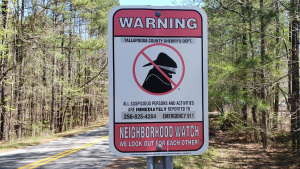
Studies show that visible deterrence reduces crime. According to the U.S. Department of Justice, signage and environmental design (CPTED) are proven tools for discouraging criminal activity. When residents and visitors see standardized neighborhood watch signs, they understand that the community is alert, organized, and supported by local police.
For law enforcement, this visibility acts as a force multiplier. Officers can’t be on every block at all times, but signs serve as a constant reminder that vigilance never sleeps. Every posted sign becomes a visible partnership between residents and law enforcement.
Saving Departments’ Time and Resources
Community policing programs often demand significant staff hours. Officers are asked to attend meetings, train residents, and manage communications. While these responsibilities are important, they can also stretch departments thin.
NNWI’s ready-to-use signs and decals eliminate the burden of creating materials from scratch. Departments simply order standardized, official signage in bulk and distribute it during community meetings or events. The result: a professional, consistent program that saves officers time while reinforcing credibility.
Strengthening Resident Confidence
One of the biggest challenges police departments face is overcoming skepticism or distrust among residents. Inconsistent programs or homemade signs may leave communities questioning legitimacy. NNWI solves this problem by offering official, nationally recognized signage.
When residents see NNWI signs, they know their program is connected to a trusted national standard. This reassurance builds confidence in both the program and the police department supporting it. Officers report fewer complaints, stronger turnout at meetings, and greater cooperation once standardized signage is in place.
Practical Applications for Departments
How can your department use NNWI signage to build trust? Here are three proven approaches:
- Bulk Distribution at Meetings – Order signs in bulk and provide them during neighborhood watch kick-off meetings. This demonstrates commitment and eliminates barriers for residents.
- Co-Branded Signage – Customize signs with department logos or city branding to reinforce authority and visibility.
- Seasonal Campaigns – Launch sign distribution drives during high-risk periods (back-to-school, holidays, summer) when property crimes traditionally spike.
Looking Ahead: Trends in Community Engagement
As budgets tighten and expectations rise, law enforcement must find scalable, affordable tools for engagement. NNWI signs are not only cost-effective but also future-proof. The recognizable design continues to carry credibility across generations, while customization options keep programs locally relevant.
In the coming years, expect to see more agencies using co-branded materials and digital integrations (QR codes linking to resources or reporting forms) to connect signage directly to resident action.
Conclusion
Law enforcement cannot succeed without community trust. NNWI signage makes that trust visible. Every sign is a promise that the police and residents are united in vigilance. For officers, it saves time, strengthens credibility, and delivers measurable results. For residents, it builds reassurance and confidence.
It’s simple. It’s proven. And it works.