Chapter 1
Benefits of a Neighborhood Watch Program
The eight things you get out of looking out for each other
The eight most important benefits of being involved in your own Neighborhood Watch program are these.
- A greater sense of security. Neighborhood policing by you and your neighbors, together with your own police or sheriff, creates a greater sense of security and well-being and reduces the fear of crime, because you know you and your neighbors will look out for each other. You also help stretch your tax dollar by using your senses and freeing up your local law enforcement agency.
- Reduced risk of being a crime victim. You are taught how to take preventive measures that substantially decrease the likelihood of becoming a victim. Neighborhood Watch does not only reduce the risk of your home being burglarized — instances of vandalism, graffiti, personal assault, auto theft and other personal crimes also decrease.
- Training in observing and reporting. The program trains you how to observe and report suspicious activities occurring in your neighborhood, what information law enforcement officers need when you report a crime and why, and how to detect illegal activities 24 hours a day, seven days a week.
- Knowing your neighbors. You get to know Participants’ regular patterns, so you can see when something is unusual. You get to know how to contact them quickly, when they are on vacation, when they are away at work, and who the occupants of their home are. Being alert to what is happening in your neighborhood is not involving yourself in other people’s business — it is guarding against any situation which could be a threat to your neighborhood.
- Greater access to criminal activity information. Neighborhood Watch programs are designed to keep Participants informed of crime trends and patterns, so they are better prepared to spot criminal activity in their neighborhood.
- On-going training in how to protect yourself. In the early 1980s the terms “car-jacking” and “ATM victim” were not even in our vocabulary. Do you or someone you know have a car alarm or an anti-theft device? Do you carry an ATM card, and sometimes bank at odd hours? Neighborhood Watch provides this training.
- Signs and decals that deter. Displaying Neighborhood Watch signs on your street and labels or decals in your windows tells a criminal that you are not an easy target, that they are probably being watched, and that you have taken the steps necessary to deter crime. Convicted burglars report avoiding neighborhoods that have Neighborhood Watch signs posted.
- Issues of mutual interest get addressed. Getting together with your neighbors regularly — monthly, quarterly, whatever you wish — gives you a body already working together. Crime prevention, fire prevention, local planning, or any other project you might otherwise say “why don’t they do something about…” to. As an organization you have the stepping stone needed to get things done. Just do it.
Chapter 2
Know Your Neighbors
You cannot spot the unusual until you know the usual
Neighborhood Watch begins with you knowing your own neighbors and them knowing about you. Our motto, “We Look Out For Each Other!”, means exactly what it says. Your ability to observe and recognize what is usual and customary comes as a result of paying attention and focusing your mind on the daily, ordinary happenings in your neighborhood. By knowing what is usual, it is then very easy to tell what is not.
Being a Participant does not mean you are involving yourself in another’s business. It does mean you are observant for possible trouble, and that you are prepared to call your law enforcement agency when you suspect potential trouble, with no hesitation.
You need to know
- What are all the addresses, styles and colors of houses in my Neighborhood Watch group?
- What are their phone numbers: home, office, cellular?
- Who lives in each dwelling — mother, child, father, others?
- What are their ages? Who is elderly or infirm? Are there any special needs?
- What hours does each person work? Is this a daily routine?
- What cars do they drive?
- When do the routine maintenance people or household helpers come by?
- Which dwellings have kids who are home alone at times?
- When are they going on vacation? For how long? Is anyone watching their house?
- Is anyone into drugs or gangs — producing, selling or using them?
- Who is having family problems?
- Who are the dependable neighbors, and who are the problems?
- Who just moved into the neighborhood, and did they rent, lease or buy? Has an effort been made to integrate them into your group?
The four worksheets that carry this information
Family Data Sheet
The foundation for implementing your program. Knowing the personal information on the sheet lets you contact your neighbor at work, and know who their alarm company is when their alarm sounds at night while they are away. Because it is a wealth of information for a prospective burglar, it should be hidden in your home so it is not readily available. You are each sharing this information for your mutual protection, not for an outsider.
Family Data Summary Sheet
A brief condensation of the Family Data Sheets, containing only the most vital and easily obtained information, so it can be kept near at hand for quick reference. Keep this highly confidential summary out of sight and protected from intruders, yet available when you need it.
Telephone Tree
Lists the names and phone numbers so each Participant can call to quickly alert everyone to a potential problem. No one person need call more than three others, and in under two minutes all 19 people in a group can be contacted. Use it for a suspicious person, for a call to 9-1-1, or simply to talk up a neighborhood get-together, a new move-in, or a new baby. The people at the bottom of the tree should call the person at the top, to confirm the chain worked.
Block Map
Designed in any format that fits the geography of your group. It lets you quickly know the names, the descriptions of the houses, and the phone numbers of your neighbors, so you can contact them or pass information along to law enforcement. Homes that are vacant or not participating should be shown.
Chapter 3
How to Observe
Ten habits that turn a resident into a witness
“We Look Out For Each Other” is the key to Neighborhood Watch success. Observation happens through diligent practice. Suspicious activities can be observed by seeing, hearing or smelling out-of-the-ordinary happenings. Here are ten good tips on how to observe.
1 · Trust your judgement
Recognize and understand what you are observing. Practice observation techniques. As you understand what is happening, make your judgment calls, and recognize when to call for help. If your judgment tells you something is not right, call immediately — don’t hesitate.
2 · At home
Observe from your home. Whether you live in a house, a mobile home, an apartment or a condominium, you are the one to determine which locations are best for observing normal and suspicious activity. Ideal locations include all the areas surrounding your property — windows, doors and garden areas.
3 · Practice
Practice, practice, practice. Like any technique, practice makes perfect. Use your head to assimilate all you are exposed to and evaluate what you see and hear. No athlete, no pilot, no bookkeeper, nobody, can perform to their utmost without practice.
4 · Knowledge
By knowing who belongs in each house, their hours of work, their automobiles, and the helpers who come into their homes regularly, you can observe what is happening and easily become suspicious of anything that does not fit your neighbor’s habits. This information should be available from your Family Data Sheet Summary.
5 · Secrecy
If something suspicious is happening, look out for your neighbor. Use your senses and call your local law enforcement agency. Remember, you are not the strong arm of the law. Don’t confront a suspect — call your police or sheriff.
6 · Vehicle or bicycle
Observing by vehicle or bicycle means relying on your knowledge of suspicious activities, sounds and smells. Practice what is needed to report a suspect vehicle or person. Practice license number memorization and the sentence on the suspect-identification page.
7 · On foot
Observe on foot as you walk or jog through your neighborhood. Commit as much of your Family Data Sheet Summary to memory as you can. Memorize the checklists of suspicious activities and sounds. Practice by mentally reviewing what you know as you pass each neighbor’s home.
8 · Be prepared
Prepare yourself by having binoculars — especially useful in rural and low-lit areas. A cellular phone will be useful in some areas, a CB or radio in others. If your group patrols, these are especially important. Apply an NNWI magnetic door sign to your vehicle.
9 · At night
Observe at night by looking around the periphery of the subject. Look in all directions, high and low and to both sides, and your view will be sharper. Prepare yourself with a small, powerful flashlight you can use without arousing suspicion.
10 · Recorded notes
The written or recorded word, with dates and times noted as the events occur, is crucial to your reporting and to any follow-up. Your memory is clear when you note immediately what you see, logging the time. If you remember something else later, note that too, with the time. Always keep a recorder or paper with you — and fresh batteries and something to write with.
Chapter 4
Suspicious Activities
What is suspicious, and what it might mean
Suspicious activity is anything that looks like it could be connected with criminal behavior — someone casing a neighborhood, forcing open a door, grabbing a child; screaming or pounding coming from a nearby residence; strong chemical odors coming from an inappropriate building. If the activity is or appears to be threatening to property or people, immediately report it by calling 9-1-1. Time is critical in apprehending criminals. It is better to be overly suspicious than to let a criminal get away.
People
Vehicles
Three real incidents
- At 3 a.m. a woman was awakened by the sound of a car pulling up at an elderly neighbor’s home. One man stayed in the car while a second disappeared around the corner of the house. Our Participant called the police, who apprehended the second man breaking into a closed convenience store next door; his accomplice was apprehended minutes later.
- A Participant saw a young man knock on her neighbor’s front door. Getting no answer, he went around the side of the house. Not recognizing him as an occupant, the Participant called the police. When they arrived the young man was caught inside, burglarizing the home.
- A neighbor had just left to go shopping, leaving her garage door open. A Participant saw two teenagers on bicycles, who had been riding slowly through the neighborhood, enter the garage. She called the sheriff, who apprehended them minutes later, bicycling away with a box of stolen auto tools.
Chapter 5
Sounds
A sound may last a few seconds and still be the whole report
Using your senses to detect suspicious activity is very helpful in combating crime. Sounds may only last a few seconds and may go undetected. Here are the sounds that require close attention, and reporting.
Cries for help
Screaming for help is precisely what you hear. Act on it. Find out where the screams are coming from and immediately call the police or sheriff. Heroes can be wounded or killed — apprehension is the job of your police or sheriff.
Continuous screaming
This type of screaming probably results from someone being hurt or mistreated. Listen especially for a victim’s cries. Quickly determine the location, source and nature, and call immediately.
Screaming and cursing
Probably a domestic violence incident — between husband and wife, parent and child, two people intent on hurting each other but not in a life-threatening way. Determine the location, source and nature, and call the police or sheriff.
Gunfire
Immediately call the police or sheriff. Provide as much information as you can about the number of shots and their source. It is important to note if there are multiple shooters or automatic weapons involved.
Alarms activated
Determine the location, source and nature of the alarm, and call.
Shattered glass
If you hear breaking glass, call immediately. It can mean someone is breaking into a dwelling or a store.
Loud music
Loud music may be used to mask other unlawful activity. If you hear loud music covering the cry of a screaming person, call immediately.
Unusual sounds
Determine the location, source and nature of the sound, and if you are suspicious, call immediately.
Dogs barking
Continuous barking of a dog in an unusual manner is cause for alarm. Determine the location of the dog and call the police or sheriff.
Chapter 6
Directions and Locations
NOW–SEE, and why the sun setting in the west matters
To give the police or sheriff an accurate report, you must be able to give an accurate description of the location. That includes the direction: north, south, east or west.
If you have trouble with directions, always remember that the sun sets in the west, just like in the cowboy movies. If you are facing west, east is behind you, north is to your right and south to your left. The sun and moon rise in the east and set in the west. Maps will almost always be oriented with north at the top. Learn the directions in which your streets travel.
NOW — SEE
An acronym to help you remember which side of the street is which, by the address numbers:
NOW — North ODD West
Odd numbers are almost always on the north and west sides.
SEE — South EVEN East
Even numbers are almost always on the south and east sides.
How to describe a location
- What is happening.
- When it happened.
- The specific address.
- Where at that location the incident is occurring.
- How it is happening.
Examples
- “Two men just came running out of the side door of McDonald’s at 123 So. Main and are heading east on Second Street in a tan Toyota pick-up truck.”
- “I am hearing screams coming from a second floor apartment in the rear of 2842 So. Chesapeake.”
- “Something suspicious, may be drugs, is happening on the south east corner of Vincent and 23rd.”

Chapter 7
Suspect Identification
One sentence that carries twelve details
Participants must be able to describe a person or suspect. In identifying a suspect, work from the top to the bottom of their body. The most important identification features are sex, height, weight, race, physical impairments, tattoos, scars and approximate age. These are the least likely to be altered by the suspect.
A simple sentence … a real help
She Simply Could Not Have Had Any Really Good Early Warning About Him
Keep repeating this sentence until you memorize it. Recall it at least three times a day. It will help you remember the twelve important aspects of a suspect’s description. Practice it as you walk, jog, bike or drive, and get it down pat.
- SheSex
- SimplyScars, marks or deformities
- CouldCarrying anything
- NotNose
- HaveHeight
- HadHair
- AnyAge
- ReallyRace
- GoodGun or other weapon
- EarlyEyes
- WarningWeight
- AboutAnything unusual
- HimHead covering — cap, mask, wig?
The full checklist
- Sex, age, race and color of skin.
- Height and approximate weight, build or posture.
- Hair color, length, wig, cap, hat, ski mask, stocking mask, baseball hat, style of wear.
- Eye color, glasses.
- Nose, lips, teeth, ears, hearing aid, facial jewelry, facial hair.
- Voice, language, accent, lisp, other speech characteristics.
- Unusual facial features, cleft chin.
- Scars, marks, tattoos, amputations, deformities.
- Right or left handed; any rings, bracelets or other jewelry.
- Gun, knife, club or other weapon.
- Clothing — length and colors of shirt, coat, jacket, necktie, shorts, pants, skirt.
- Name, if known or called out by an accomplice.
- Carrying a bag, back pack, fanny bag, duffel bag.
- Gloves and shoes — colors and types.
- Anything else unusual.
Chapter 8
Vehicle Identification
What to notice about a vehicle, in the order it helps
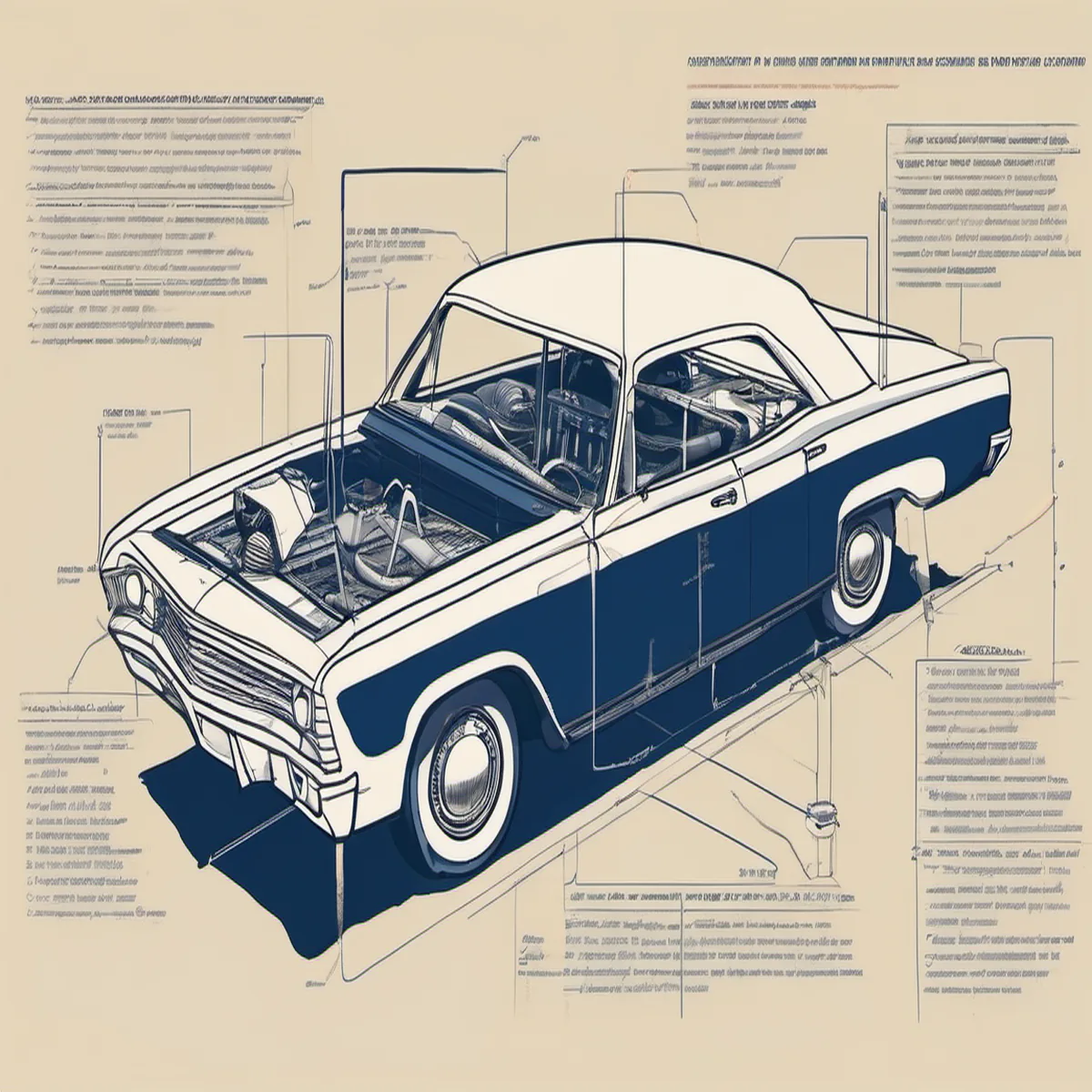
When you report a vehicle, work through these details. Anything you can give is better than nothing — even “domestic or foreign” is useful.
Kind of vehicle
Car — 2 door, 4 door, sports car, convertible. Recreation or sport utility vehicle. Camper, and its style, on the back of a pick-up. Van, station wagon, windowed or solid sides. Truck — small pick-up, large pick-up, flat bed, stake truck, boxed cargo truck. Motorcycle — small or large, side car, domestic or foreign, street or dirt.
Colors
Single color or two colors. The color and the shade of that color — blue could be midnight blue, powder blue, aqua blue. Window tinting, rear or side, and the color of the tint.
Make and model
American: Ford, Chevrolet, Mercury, Buick, Plymouth, Chrysler, Dodge. Asian: Toyota, Honda, Hyundai, Kia, Acura, Nissan, Isuzu, Mazda, Lexus, Infiniti. European: BMW, Mercedes, Jaguar, Volvo, Fiat, Renault, Volkswagen. Perhaps you can only describe it as domestic or foreign — that’s OK.
Year
If you know the year, great. If you don’t, guess how old you think it is. Several years old? Really a wreck?
Additional things
Any identifying bumper stickers, dents, bullet holes, broken windows? Was it lowered or raised from the standard production model? Was it damaged in any way — bullet holes, been in a crash? Hub caps missing, chrome wheels?
Chapter 9
Phonetic Alphabet and License Plates
How to say a plate number so it is heard correctly the first time
To avoid errors in verbal communication, the phonetic alphabet was created. Although there are many versions, including the military’s “Alpha, Bravo, Charlie”, law enforcement agencies have adopted the version below. Because the words bring people and things to mind, they are easily remembered, and are especially helpful in memorizing license plate numbers.
- AAdam
- BBoy
- CCharles
- DDavid
- EEdward
- FFrank
- GGeorge
- HHenry
- IIda
- JJohn
- KKing
- LLincoln
- MMary
- NNora
- OOcean
- PPaul
- QQueen
- RRobert
- SSam
- TTom
- UUnion
- VVictor
- WWilliam
- XX-Ray
- YYoung
- ZZebra
Practice makes perfect. Memorize the phonetic sound for each letter. Then, while you are in your car, observe the license plates of other cars and say to yourself that “3KGU775” is “3-King-George-Union-7-7-5”. Practice until you can recall any plate number. Break the plate down into alphabetic and numeric components. If it is a vanity plate, try to remember what they are trying to say. And always observe the state in which the plate was issued.
License plates
Law enforcement counts on your ability to know the license plate number of any suspicious vehicle, record it quickly and exactly as you see it, and report your suspicion quickly so they can pursue and apprehend.
With the multitude of plate designs issued by the 50 states, the Canadian provinces and the Mexican estados, it is also important to describe the plate and any unusual features. Those include county designations, environmental messages, universities and veterans groups. If nothing else, remember the colors of the background and of the letters and numbers.
Chapter 10
Reporting a Crime
What, when, where and who — the first four things they need
If you know a crime is happening, suspect that something dangerous is going on, or even think potential trouble exists, first decide whether it is an emergency. An emergency requires immediate police or sheriff, fire or paramedic response — a person facing a deadly situation, or property in the process of being stolen or jeopardized. Call 9-1-1 or your local emergency number immediately.
If the situation is routine, do not tie up the emergency lines — call the regular number of your local law enforcement agency. Unsure? Call 9-1-1.
What you will be asked
First
What is your emergency — police, fire or medical? What is your location, your name and phone number? Are you in any danger?
What is happening
Be as calm and specific as possible. “This is an emergency. Two people have just been wounded and the gunman has fled.”
What is needed
Police or sheriff? Fire department? Paramedic? “We need police and paramedics now!”
When is it happening
Is it now? How long ago did it occur?
Where is it happening
Give the specific address and directions. “The shooting happened at the McDonald’s at 123 So Main, in Albany.”
Who is involved
Quick descriptions of the victims and the perpetrators. “Two teenage boys are wounded. The suspects were male, about 20 years old, black hair, driving a blue Dodge van, license number 3-Adam-Boy-Charlie-555, California plates.”
Then wait for the operator’s questions. Be as specific and factual as possible in answering them, and follow any instructions given. If you have to generalize about an answer, say so. Know the location you are calling from, and cooperate fully with the operator and with any follow-up personnel.
Chapter 11
Call 9-1-1
Stay on the line until the dispatcher tells you to hang up
The first words you will hear are: “9-1-1. What is your emergency?” Make your answer as clear as possible. State first whether it is a crime, fire or medical emergency. If you are in a metropolitan area, give the city so you can be routed quickly to the proper agency.
Follow the direction of the dispatcher. He or she is trained for emergency situations and will guide you through the entire process. While the operator is talking with you, they are relaying information to the appropriate agency through a computerized dispatch system. Because of this fast electronic network, the dispatcher can communicate with field units while the operator obtains information from you. If the field unit has questions, they can come back through the dispatcher to the operator talking to you. That is why you must never hang up until instructed.
The dispatcher will probably ask
- Your name, address and phone number.
- What is happening — is the crime in progress, or about to happen?
- If it is a crime: a description of the suspects, how many, are they armed, are weapons being used.
- A description of the vehicle, including make, color and license number.
- The direction or street they are heading.
Did you know
- 9-1-1 can be called from any pay phone without depositing any money.
- Assistance is available in any language, though be prepared for a slight delay while the translator is brought on the line.
- 9-1-1 operators are trained emergency medical dispatchers. They can guide you through emergency procedures over the phone and give pre-arrival instructions until medics arrive.
- If you are hearing impaired you will be connected to a TDD receiver upon request.
Chapter 12
Participant’s Responsibilities
Thirteen things every Participant signs up for
As a Neighborhood Watch Participant, you have a responsibility to do the following.
- Learn your neighbors’ names, including all occupants of their residences. Be able to recognize them and their vehicles without any hesitation.
- Attend all Neighborhood Watch meetings.
- Keep your personal copies of the Family Data Summary Sheets, Block Map and Telephone Tree in an easily accessible, secure place, continually updated with any new information from your Block Captain.
- Properly identify all property using the guidelines suggested at your meetings and through Operation ID, and maintain an accurate inventory of your valuables.
- Implement all security measures suggested by your local police department or sheriff’s office after a security survey has been completed in your home.
- Learn the techniques of getting an accurate description of a suspect or a vehicle. Practice by writing them down from memory, so that when the need arises you are prepared.
- Keep an eye on your neighbors’ homes and report any suspicious activity. Write the description down so you forget nothing. Do not delay reporting — a few minutes’ delay is enough to reduce the chances of ever catching the criminal.
- Display Neighborhood Watch window warnings around your home. Report vandalized or missing signs so they can be replaced. Rusted signs need replacing — be sure you purchase aluminum or plastic.
- Teach children respect for the law and crime prevention techniques, around the neighborhood and in their personal life and safety away from your home.
- Remember always that your responsibility is to report crime. Do not take any risks to prevent a crime or try to make an arrest. The responsibility for apprehending criminals belongs to the police or sheriff.
- When you plan to leave for any length of time, arrange to have your mail picked up or put on temporary hold. Newspapers should be picked up by a neighbor or stopped. Set timers to activate lights, television and radio — in rural areas, in out-buildings too. Take garbage cans in. Don’t leave signals saying no one is at home.
- Notify your neighbors and the Block Captain that you are going away, so added attention can be placed on your home.
- Get involved. Look out for each other. Be a good witness with written notes. Participate in your Neighborhood Watch program. You can make a real dent in crime in your neighborhood.

Chapter 13
An Overview of the Program
What Neighborhood Watch is, and what it is not
Neighborhood Watch can be a great many things. It is worth being equally clear about the three things it is not.
Neighborhood Watch is
- A crime prevention program where neighbors look out for each other.
- A crime prevention program that encourages Participants to get to know each other and their routines, so that any out-of-place activity can be observed, recognized for what it is, reported and investigated.
- A crime prevention program that teaches Participants techniques to reduce the risk of being victimized at home, in their vehicles and in public places.
- A crime prevention program which trains Participants on the importance of recognizing suspicious activities and sounds, evaluating them, and then reporting them properly.
- A crime prevention program which teaches Participants how to make their homes more secure and properly identify their property.
- A cohesive body of concerned, involved Neighbor-Participants addressing many issues that concern the entire community.
Neighborhood Watch is not
- A force working outside the normal procedures of the local police department or sheriff’s office.
- A 100% guarantee that crime will not occur in your neighborhood.
- A program designed for Participants to undertake personal risks to deter crime.