Chapter 1
Avoiding Trouble
Out on the street, in the car, on the bus, at work
The best crime prevention is crime avoidance. Don’t put yourself and your family in a situation where crime will most often occur. By taking a few simple precautions you can reduce the risk to yourself and your family by discouraging those who commit crime. Talk these ideas through with your family. Teach them to always be alert and aware of the people around them, and to be especially alert in places that make you vulnerable — alleys, dark parking lots, and ATM machines. While you are teaching them, you reinforce the tactics in your own mind.
Street precautions
- Be alert to your surroundings and the people around you, especially if you are alone or it is dark.
- Whenever possible, travel with a friend.
- Stay in well-lighted areas as much as possible. Carry a small flashlight if out at night.
- Walk close to the curb. Avoid doorways, bushes and alleys where someone could hide.
- Walk confidently, and at a steady pace.
- Make eye contact with people when walking.
- Do not respond to conversation from strangers on the street — continue walking.
- If you carry a purse, hold it securely between your arm and your body.
Car safety
- Always lock car doors after entering or when leaving your car.
- Park in well-lit, active areas.
- Have your car keys in your hand so you don’t have to linger before entering your car.
- Check the back seat before entering your car.
- If you think you are being followed, drive to a public place or a police, sheriff or fire station.
- If your car breaks down, open the hood and attach a white cloth to the car antenna.
- If someone stops to help, stay in the locked car, roll the window down just a little, and ask them to call the police, sheriff, AAA or a tow truck.
- Don’t stop to aid motorists stopped on the side of the road. Go to a phone and request help for them.
Waiting for a bus
- Avoid isolated bus stops.
- Keep safely away from the curb until the bus arrives.
- Don’t open your purse or wallet while boarding. Have your pass or money ready in your hand or in an easily accessible pocket.
- Don’t invite trouble — keep gold chains out of sight, don’t flash jewelry, and turn your rings around so the stones don’t show.
On the bus
- During off-hours, sit as close to the bus driver as possible.
- Stay alert, and be aware of the people around you.
- If someone bothers you, change seats and tell the driver.
- Carry your wallet inside your coat or in a front pocket. A comb placed horizontally in the fold of your wallet will alert you if someone tries to remove it from your pocket.
- Keep your handbag in front of you and hold it close to your body with both hands.
- Check your purse or wallet if someone is jostling, crowding or pushing you.
- If you see any suspicious activity, immediately tell the driver.
Office security
- Never leave your purse or billfold in plain view, or in the pocket of a jacket hanging on a door.
- Personal property should be marked with your driver’s license number, preceded by the state initials such as CA.
- Don’t leave cash or valuables at the office.
- If you work alone, or before or after normal business hours, keep the office door locked.
- If you work late, try to find another worker or a security guard to walk out with you.
- If you are in the elevator with another person, stand near the control panel. If you are attacked, press the alarm and as many of the control buttons as possible.
- Be alert for pickpockets on crowded elevators.
- Report all suspicious people and activities as soon as possible to the office manager, building security or law enforcement.
Chapter 2
Locks
What actually holds a door shut, and what only looks like it does
Beyond the obvious need for locks, many considerations need to be made as to the type of lock, its purpose, and the safety issues involved in getting in and out of a locked door or window in an emergency such as a fire or natural disaster. The overall best lock for securing your residence is a single-cylinder deadbolt that opens from the outside with a key and from the inside with a simple thumb turn, without a key. Unfortunately these locks are not common in most homes.
How a burglar opens a door
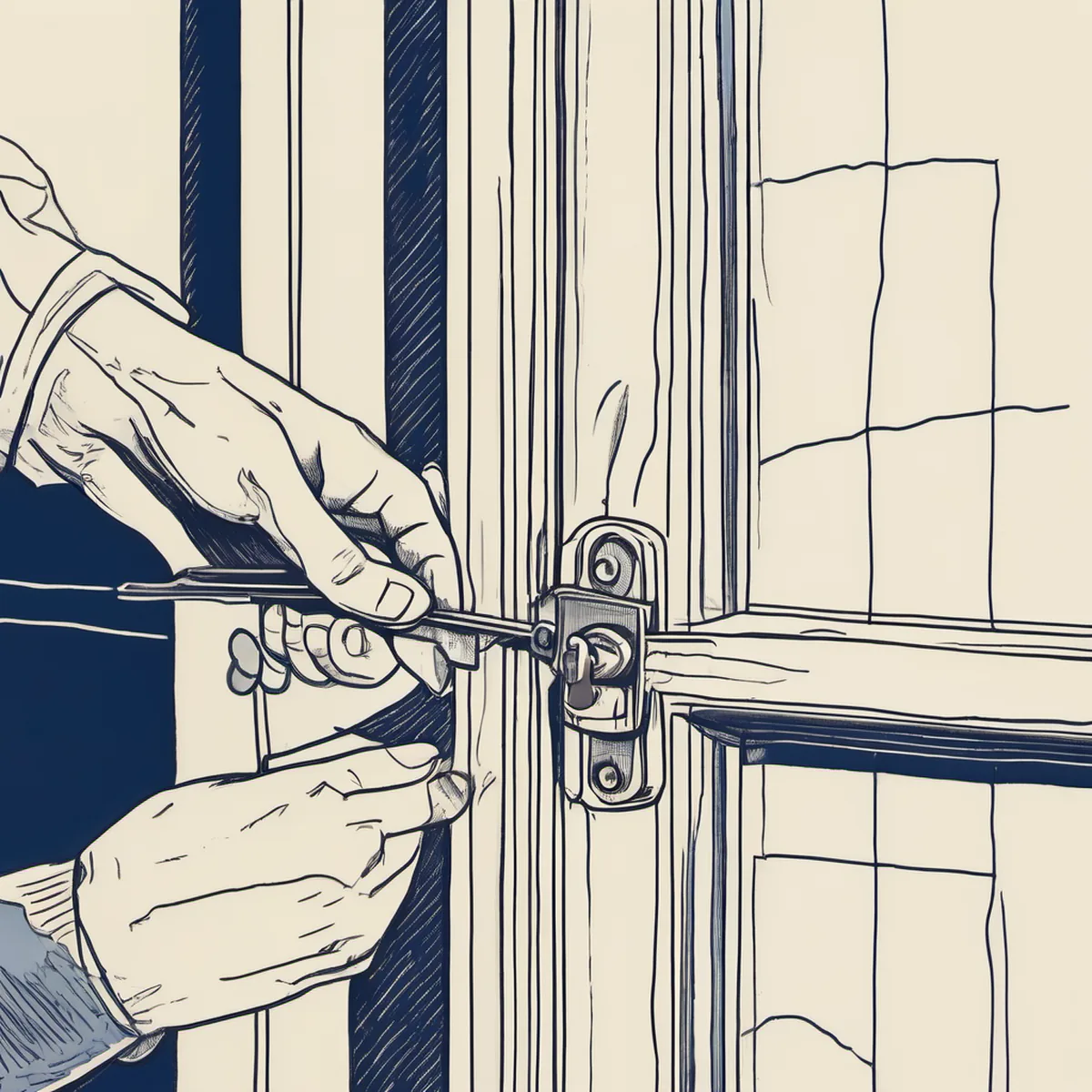
These are limited only by the ability of the burglar and the amount of time at his disposal. Remember, delaying a burglar is one of your best deterrents. There are many ways a lock can prove meaningless to a burglar who:
- Finds the door unlocked.
- Has a key from the previous owners or tenants, or finds one under the door mat, in a flower pot, in the mail box, or over the door.
- Removes or breaks glass in the door, reaches inside, and opens the door.
- Jimmies or pries the door open with a crowbar or other tool.
- Gets the victim to open the door, who then foolishly relies on a useless chain latch.
- Splits or spreads the door frame by kicking in the door, usually at the lock area, or with tools.
- Finds a door with plywood panels which can easily be kicked in, then unlatches the door or simply crawls through the opening.
- Uses a pipe wrench, hammers the door knob, or pulls the key cylinder plug with a slide-hammer dent puller.
Most of these can be prevented with a little common sense. Not all, though — and here is a rundown of locks.
Spring latch lock
If you use this as your sole means of security you might as well not close your door. As you close the door the latch springs into place; a simple shim placed between door and frame causes the latch to retract and the door to open. The technique is so simple the most inexperienced burglar can almost walk through the door. A deadbolt must be added.
Cylinder (key-in-the-knob) lock
Not adequate for exterior doors. Best used for interiors and privacy, such as closets and bathrooms. Easily opened with credit cards, a dent puller or a pipe wrench.
Deadlatch lock
Equipped with a deadlatching or tripper pin attached to the bolt. When the door closes this pin is depressed and the bolt is immobilised. Somewhat better than a spring latch, but still vulnerable to prying, twisting or pounding. A deadbolt must be added.
Single-cylinder horizontal deadbolt
Keyed outside, thumb turn inside. Ideally a minimum 1″ throw, a case-hardened steel insert in the bolt to prevent cutting, and a tapered, free-turning case-hardened cylinder guard. The thumb turn eliminates the need for a key inside — a real safety advantage in a fire. With a solid core door and no nearby window, this is your best security. If the door has a window, or there is a window within arm’s reach of the thumb turn, that security is compromised.
Double-cylinder horizontal deadbolt
Keyed on both inside and outside. Only appropriate for non-residential settings such as businesses or tool sheds, where it stops burglars who have hidden inside until after hours. Many building codes make this type unacceptable for residences because a key is needed to exit in an emergency.
Double locking deadbolt
A combination of a half-inch throw deadlocking latch and a one-inch throw deadbolt with a concealed steel roller that resists sawing or prying. The mechanism is protected by an armour plate under the ornamentation, resisting drilling, sawing or piercing. When locked, the outside knob free-spins so it is impossible to get leverage on it. The recessed cylinder discourages forceful entry.
Single-cylinder vertical deadbolt (rim lock)
Keyed outside with a thumb turn inside. Extremely resistant to prying or cutting. Mounted on the surface of the door rather than mortised into it. Same window caveat as the horizontal deadbolt.
Buttress-type lock
If the frame cannot be strengthened or reinforced, as in an older building, use this type with a long steel bar that sits in a floor receptacle and wedges against the inside of the door — using the strength of the door instead of the frame. The bottom of the door must fit closely to the floor so the bar cannot be removed by an intruder.
Cremone bolt
A surface-applied device that, by a turn of a knob or lever handle, locks the door or sash into the frame at top and bottom.
Flush bolt
Very similar to a cremone bolt except the bolts are operated independently, top and bottom. Usually used for double doors, with the bolt installed on the inactive door. Flush bolts offer additional security since an intruder cannot get at them to tamper when the doors are locked.
Cross bar
Useful for a door which is seldom used and is not required as an emergency exit. Heavy hooks holding a heavy cross bar provide excellent security when padlocked. Secure the bar to the hooks so an intruder cannot use the door as an exit, or pry the bar off by slipping a tool between the frame and the door.
Strike plate
A reinforced strike plate is necessary for good locks to perform well. Reinforce with screws long enough to reach past the trim and into the studs — at least 3″ to 5″. The plate should have at least four screw holes, with screws through each into studs. Attaching a piece of heavy-gauge sheet metal to the door frame for about 16″ will reinforce the lock area and make it much harder to kick the door in.
Hasps
Fastening devices consisting of a loop and a slotted hinged plate. Placing the hasp high on the doorway makes it harder for an intruder to manipulate the lock going through the loop. Hasps should be very securely bolted so the screw heads are completely covered when the hasp is closed.
Padlocks
A good padlock should be case-hardened steel, have heel and toe locking, and be constructed so the key cannot be removed unless the padlock is closed. Record the identification numbers, then obliterate them on the lock casing.
Panic bars
Where a doorway in a public area must be available as an emergency exit but not as an entrance, a panic bar is the best answer. There is no lock visible outside; a simple push from inside actuates a cremone bolt or center latch and the door swings outward.
Flip or nib lock
Installed properly with wood screws of at least 1½″ and located out of reach of any window and of small children, this provides good additional security. Two sections — one on the door, one on the frame — with a metal flap that swings into a locked position.
Common chain locks — last and definitely least
Easily defeated with a kick or a strong push. The chain is usually very weak and the screws holding it are almost always too short. Extra-heavy-duty varieties may exist and if properly installed could be effective. Not recommended.
Chapter 3
Doors and Entrances
The door itself matters as much as the lock in it
A first-class lock in a hollow door, or in a frame that splits when kicked, buys you nothing. Treat the door, the frame, the strike and the lock as one system.
- Solid core doors. Exterior doors should be solid wood or metal-clad, strong enough to withstand excessive force. Hollow-core doors belong inside the house, not on it.
- Frames. Door frames should fit snugly around exterior doors. Cement filler in the void behind the frame prevents the frame being forced or spread apart.
- Strike plates. Reinforce with 3″–5″ screws that reach the studs, four screw holes minimum.
- Viewers. Install a wide-angle viewer in front and back doors — and a second, lower one if you have a small child at home.
- Glass and panels. A door with glass, or with plywood panels that can be kicked in, undermines whatever lock you fit. Consider a double cylinder lock only where code allows.
- Garage. Can you close and lock your garage door — and do you? Apply the same standard to the pedestrian doors from the garage into your house or yard.
- Basement doors need extra protection, and basement windows need metal screens or other protection.
Chapter 4
Windows
Every window is a door that has not been locked yet
Windows are the most commonly overlooked entry point in a house. Each type has its own weakness and its own inexpensive fix. Whatever you fit, keep at least one window in each sleeping area usable for emergency exit.
Sliding windows and glass doors
Place a wooden dowel or board that fits snugly in the track. Pin the sliding panel to the fixed panel by drilling a downward-sloping hole through the inner frame into the outer, and dropping in a nail or pin, so the panel can neither be slid nor lifted out of its track.
Double-hung windows
Drill a hole at a slight downward angle through the top corner of the inner sash into the outer sash and insert a pin or nail. Drill a second hole a few inches up to allow the window to be locked partly open for ventilation.
Basement windows
A length of metal pipe installed on the inside of the house can secure a basement window. Metal screens or grilles also work — but keep emergency exit in mind.
Casement windows
Remove the crank when you are away, or add an angle iron, carriage bolt and wing nut.
French windows
Secure with self-mounted flush bolts at the top and bottom of each window.
Hinged windows
Secure with a flush bolt or a surface bolt.
Louvered windows
The weakest window there is — the panes lift straight out. Glue the panes into their frames with epoxy to prevent easy removal, and consider adding a grille or screen on the outside.
Chapter 5
ATM Precautions
Sixteen habits that make you a poor target at the machine
Automated teller machines offer convenience to users and opportunity to criminals. Although not a usual part of Neighborhood Watch activities, you and your neighbors no doubt use these machines. Here are the precautions you need to take.
- Prepare for your ATM transactions at home or the office to minimize your time at the machine — fill out deposit slips and have envelopes ready before you go.
- Mark each transaction in your account record, but not while at the ATM.
- Always save your receipts. Don’t leave them at the ATM — they may contain account information.
- Don’t lend your ATM card to anyone.
- Do not leave your card at the ATM, especially in the machine.
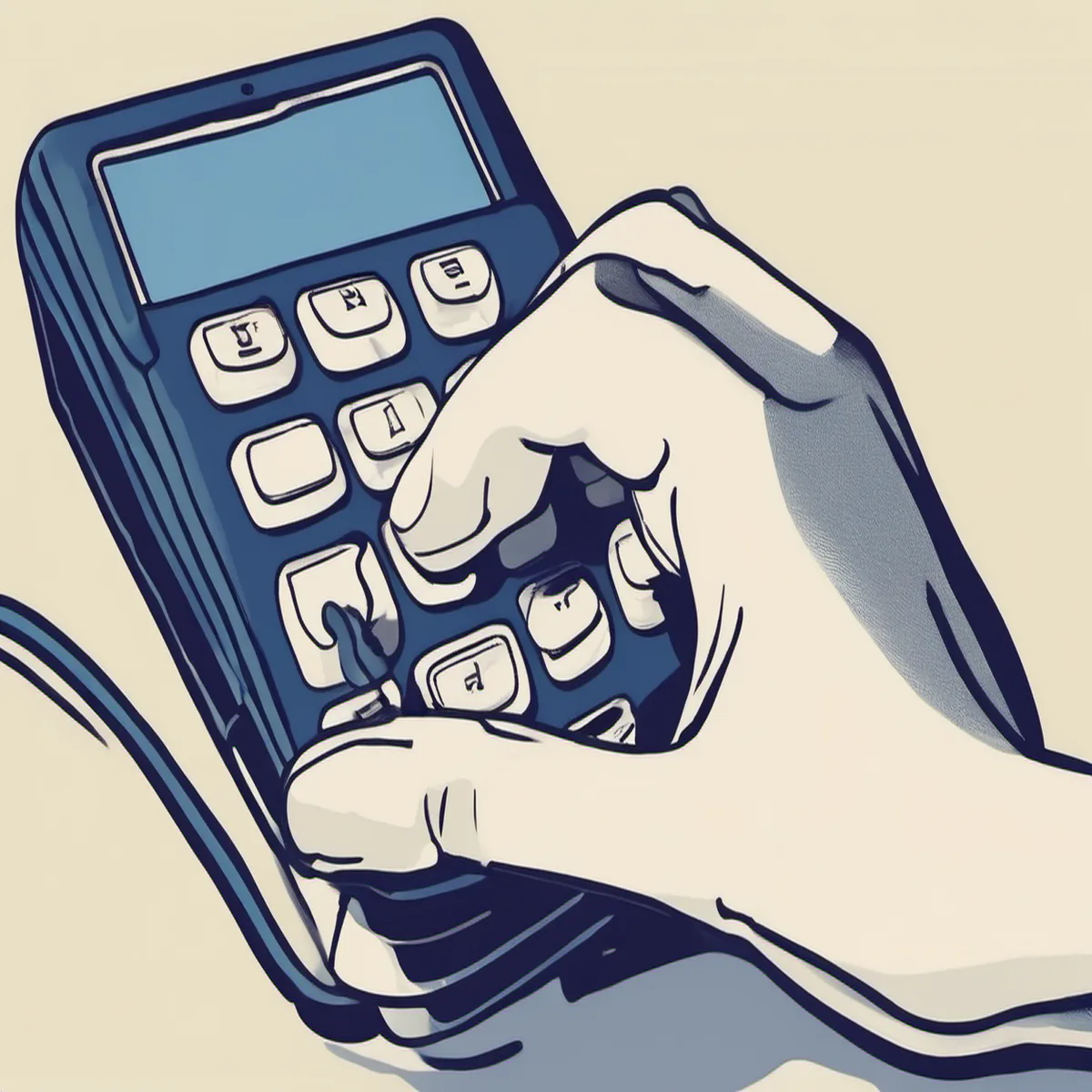
- Protect the secrecy of your Personal Identification Number. Don’t tell anyone your PIN, don’t write it where it can be discovered, don’t keep a note of it in your wallet or purse, and especially never write it on the card itself.
- Prevent others from seeing you enter your PIN by shielding the keypad with your body or your other hand.
- If your card is lost or stolen, promptly notify your bank and your local law enforcement agency. Keep the phone numbers of your ATM and credit card companies handy at home or the office.
- At the ATM, be especially mindful of your surroundings. Look out for suspicious activity near the facility. At night be sure the site, the parking area and the walkways are all well lit. It may be wise to bring someone with you. If you observe anything unusual, go to another ATM.
- Don’t accept assistance from anyone you don’t know when using an ATM.
- If you notice anything suspicious after you have begun a transaction, cancel it, pocket your card, and leave.
- Wait until you are in secure surroundings to count your cash.
- If you are held up after you get your cash, throw the cash on the ground and run, screaming, for help.
- At a drive-up ATM, make sure all car doors are locked and all windows rolled up except the driver’s. Keep the engine running and remain alert.
- Tell your bank of any problem with an ATM facility — a light not working, damage to the machine, vandalism, or suspicious individuals loitering. Report suspicious activity to the bank and to the police.
- Practice these precautions at the ATM facilities where you bank, and also at point-of-purchase sites where you buy fuel or groceries.
Chapter 6
Minimize Car-Jacking Risks
Nineteen common-sense precautions
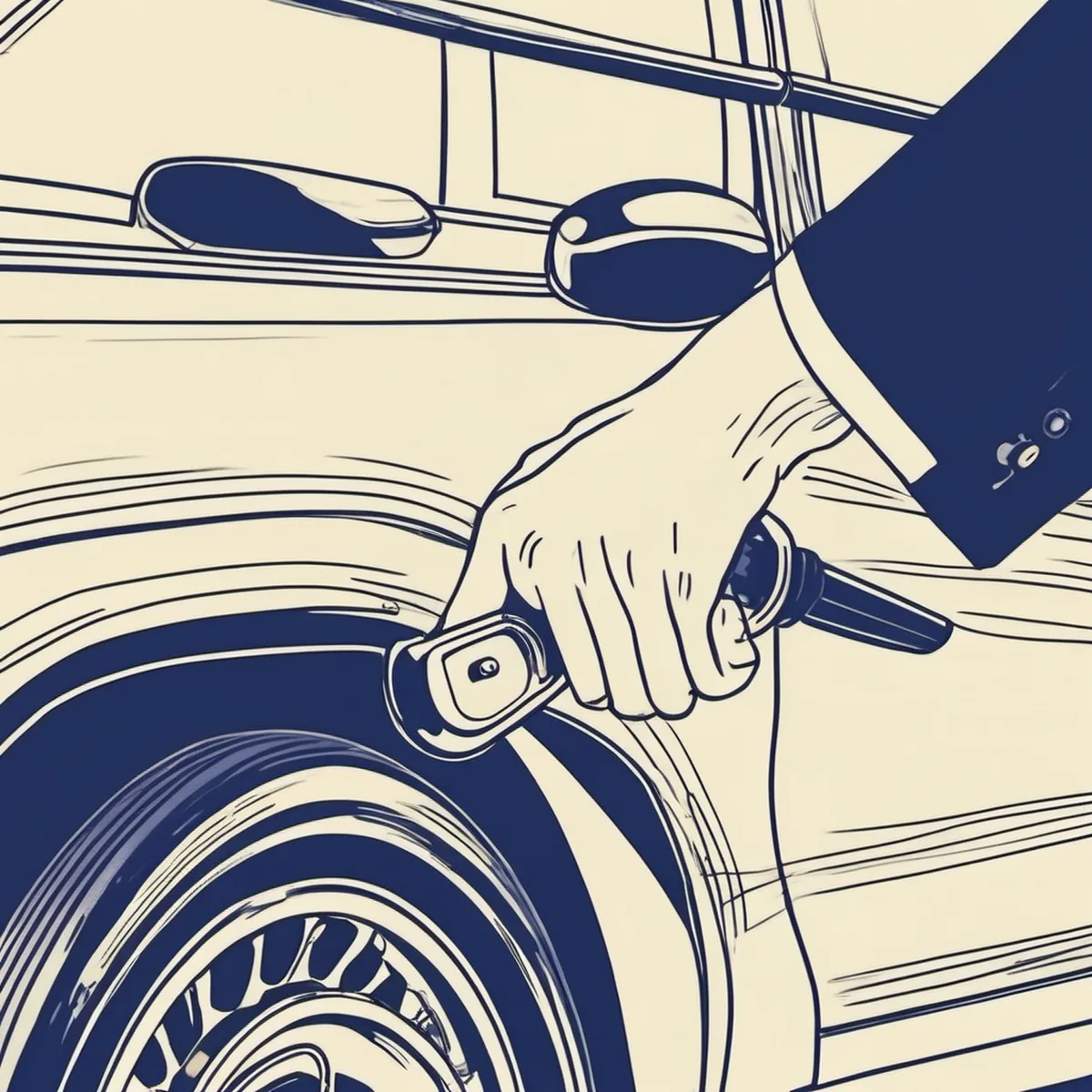
Thrusting a gun in your face and taking your car while you are in a parking lot, at a traffic signal, getting gas, or simply waiting in your car is called car-jacking, and it can happen to you. Here are nineteen common-sense precautions that put the odds in your favor.
Before you enter your car
- Be alert to any activity near your car.
- If there is someone loitering near your unoccupied car, keep walking until they leave.
- Pay attention to your surroundings.
- In a parking lot, approach your car by walking in the center of the driving lane, not at the side where someone could leap out from between cars.
- Walk with a purpose.
- Don’t walk aimlessly towards your car. Have an alternate route in mind in case of problems.
- Always have your key in hand, and check the back seat and the locks before entering.
- If someone demands your car, especially with a child in a car seat, gain time by asking to get your child out, holding your keys momentarily and then throwing them away, preferably under another parked car.
- If you are confronted, do not resist.
- Never get in a car with a car-jacker. Scream, run, do everything you can to avoid getting in.
Once in your car
- Lock and start your car immediately. Keep doors and windows locked.
- If someone threatening you blocks your pathway, drive away from the threat.
- Stay out of high crime areas, especially at night.
- Be suspicious of people approaching your car asking for directions, change, or handing out flyers.
- When stopping in traffic, leave enough distance between your car and the one in front so you can pull away quickly and safely if necessary.
- If a suspicious person approaches your car, drive away carefully — being careful to avoid an accident.
- If another vehicle bumps your car, or your tire goes flat, keep your doors and windows closed and wait for law enforcement — or put your flashers on and drive slowly to the nearest police station or populated area such as a store or gas station.
- Be especially alert when using drive-up automated teller machines.
- Always keep valuables out of view when traveling.
Chapter 7
Apartments and Other Multi-Unit Dwellings
Shared buildings, shared responsibility
Apartment and other multi-unit dwellers have most of the same security concerns as residential dwellers, plus a few of their own.
- Lighting is probably the most important consideration in apartment security. Are halls, laundry rooms, stairwells, parking lots and the building exterior adequately lit?
- Are storage areas, the basement, laundry rooms and other common tenant facilities well locked? Is there adequate control of the keys providing access to these areas?
- Install deadbolt locks on all exterior doors — tenants usually pay for these. Have the deadbolt be a different make than the door lock, and don’t master-key your lock to the management locks. You can give a friend a key marked “Do Not Duplicate” in a sealed envelope. Let your manager or superintendent know whom to contact in an emergency.
- Look for special security and safety features in your building. If there are security or fire alarm buttons, be sure you know where they are. Know the nearest exit for use in an emergency.
- Tell a friend, the manager or the superintendent when you will be gone for an unusual length of time such as a vacation or hospital stay. Leave an address or phone number where you can be reached.
- Put lights, television and radio on programmable timers so a potential intruder will think someone is at home.
- Know your neighbors. Set up your own Neighborhood Watch program with them and with those in nearby buildings. Look out for each other.
- Join forces with your neighbors to insist that management and owners provide adequate building security and safety if these are inadequate. Check local housing regulations to make sure your building complies.
Chapter 8
Vacation Preparation
Twenty-three steps before you go, ten more while you travel
A vacation should be a pleasant experience for you and your family. Take a few simple steps to reduce the possibility of a burglarized house while you are away.
One or two days before you leave
- Notify your newspaper to put your subscription on a vacation hold, and give them a restart date.
- Notify your local post office to put your mail delivery on a vacation hold, with a restart date.
- As an added precaution, ask a neighbor to pick up your newspapers and mail if your instructions were not followed, and to remove throwaway papers and circulars from your yard and doorway.
- If you have valuables in the house, take them to your bank for storage in a safe deposit box or vault. Do not leave cash in the house. By this time you should have engraved valuables such as televisions, appliances and computers.
- Notify your local police or sheriff’s department about your departure and return dates. Give them the name and telephone number of a neighbor or relative to notify in case of burglary, fire or other emergency.
- Make arrangements to have your grass cut and watered, leaves raked, or your walk and driveway shoveled in winter.
- Move all ladders, tools, lawn implements, garbage cans and yard furniture to your garage, basement or storage shed several days before you leave.
- Arrange with your block captain, a neighbor or a relative to watch your house. Give them a key and let them know how you can be reached. Write their telephone number down so you can check in during your trip. Give them your car description and license number.
- Make sure any broken windows, window locks and door locks are repaired.
On the day you leave
- Plug in timers to turn lights and a radio on and off at appropriate times, giving the appearance that the home is occupied.
- Unplug electrical appliances such as television sets, irons, washers, dryers and fans to prevent possible damage from electrical storms.
- Set your thermostat so the furnace or air conditioning maintains a reasonable temperature — 85°F in summer and 50°F in winter are good settings. In winter make sure outside water taps are drained to prevent freezing.
- Close your fireplace flue to prevent birds or animals entering.
- Be certain all gas appliances are in good order and pilot lights are on.
- Turn off the water to the automatic washer to prevent damage from a broken hose.
- Turn the ringer off on your phone so it cannot be heard from outside. Do not leave a message saying you are away on vacation on your answering machine.
- Close and lock all windows and sliding doors. Place wooden dowels in all sliders. Check that all screens and storm windows are locked and fastened.
- Arrange main floor drapes, shades and curtains in their normal daytime position so neighbors and police can see into your house. Better still, ask a friend to close and open window coverings daily.
- Be certain any vehicle you are leaving in your driveway is locked. If you take your only car, ask a neighbor to park their car in your driveway.
- Lock your garage door and disengage or turn off power to the automatic opener.
- Make sure the last person out locks the door. If you have an alarm system, make sure it is on.
- Take a walk around the house. Check all the doors and windows.
- As you pack your luggage, check the identification tags. If you will be checking luggage, only your business address and phone number should be shown — never your home address.
If you are driving
- Make sure your vehicle has been properly serviced and is in suitable condition for the journey.
- Try to have specific directions and routes to your destination.
- If you get lost, call the local police or sheriff for directions or assistance.
- Always keep your vehicle doors and windows locked.
- At stop lights and other traffic delays, leave enough space in front of your vehicle so you have an escape option in an emergency.
- Let someone know the route you intend to travel and your itinerary. This will help authorities locate you if there is ever a need.
- Plan your trip carefully and allow for weather, fatigue, and facilities for lodging, food and fuel.
- Be sure you have sufficient finances, either cash or credit cards.
- Ask the hotel or motel staff about their security measures so you know what to expect.
- Use the hotel or motel safe to store your valuables during your stay.
Chapter 9
Holiday Season
The time of year when busy people become careless
The holiday season is a time when busy people become careless and are especially vulnerable to theft and other crimes. Here are crime prevention tips that will help keep your holiday a happy one.
While shopping
- Lock your packages in your trunk while you shop.
- Lock your car and close the windows, even if you will be away for only a few minutes.
- Stay in busy, well-lit places — especially if you are waiting for public transportation.
- While shopping with children, teach them to go to a store clerk and ask for help if they become separated, not to a stranger. Show young children how to identify a clerk: people are paying them money and they are packaging the things being purchased.
- Young children should never go to the parking lot alone, and should never be left inside a car with the windows rolled up.
- Avoid carrying cash. Credit cards are accepted by most stores and are processed almost immediately.
- Be extra careful with purses and wallets — they become targets in crowded shopping areas, at bus stops, and on public transport. If you feel a bump from another person, check for your purse and wallet instantly.
While partying
- Never drink and drive. Only abstinence and time will make your body alcohol-free. If you do drink, designate one of your party to stay totally sober.
- If you are the host, have non-alcoholic beverages available. Measure the liquor being poured with a 1 oz or 2 oz shot glass rather than pouring from the bottle. Liqueurs may be tempting to small children because of their sweetness — the alcohol in them could be deadly.
- Serve meat, cheese, eggs or other high-protein foods, which stay in the stomach longer and slow the absorption of alcohol. Always have something to eat before you drink.
- Coffee makers, crock-pots and all small kitchen appliances should be unplugged when not in use.
Around your home
- Be fire safe, especially with your Christmas tree. Make sure lights are in good working order. Keep the tree moist with a water-filled base, use a fire retardant in the mixture, and check the base every few days — a pine tree absorbs a tremendous amount of water. Never put your tree in your fireplace; it burns like a bomb. Be sure doors and passageways are not blocked by the tree, be sure it is in a sturdy base so children or pets cannot tip it over, and never use burning candles on a tree.
- Never leave lit candles unattended. Check decorations for flame resistance and never assume they are flame retardant.
- Be security conscious by locking doors and windows when you leave the house, even for a few minutes.
- Leave lights and a radio or television on so the house appears occupied.
- Do not put large displays of holiday gifts in view of your windows or doors.
- If you go away for the holidays, get an automatic timer for your lights, television and radio.
- Have a neighbor watch your house. If away for just a few days, have them pick up your mail and newspapers; if longer, stop the newspaper and put your mail on a vacation hold.
- Are there valuable new possessions in your home? Mark them with your state and driver’s license number, or photograph them for your permanent records.
- Remove and store your ladders. Don’t invite burglary.
- Don’t forget the seniors and shut-ins in your neighborhood who might be especially lonely during the holidays. They are frequently the observers in your Neighborhood Watch who are most likely to protect your property.
Chapter 10
Home Alone: Latch-Key Kids and Block Parents
Identify the safe houses before anyone needs one
Old, well-established neighborhoods have become the exception rather than the rule. Because of the highly transient nature of many Americans we have become increasingly unfamiliar with one another, and our children are frequently home alone because both parents are at work.
At the top of the list of Neighborhood Watch projects is establishing a Block Parent system. Identify homes where children know they can go when they need help, where it is safe, and when their own parents are not home. Place signs in the windows of selected houses so children can find them easily. Ask parents to introduce their children to these Block Parents before an emergency arises.
In the minds of most parents, safety and security for their children is of the highest importance. Unfortunately an innocent child probably will not think about safety on their own. Parents, teachers and Block Parents must train children how to be safe after school. Here is what they need to know.
- Walk home in groups as much as possible.
- Never take a ride from someone they do not know extremely well.
- Be observant on the way home and be aware if an adult follows them.
- Never talk to strangers, and especially never give their name and address to a stranger.
- Know their own address and phone number, and how to dial 9-1-1 if someone follows them.
- Hide the house key under a shirt or blouse. Keys should never be exposed — an exposed key advertises that a child will be home alone.
- Know where to find the phone numbers of neighbors, relatives, and your work.
- Always lock the door after they come home.
- Know what information to give on the phone.
- Check in with an adult neighbor or their Block Parent, in person or by phone, when they get in.
Chapter 11
Battered Women
The cycle of violence, and the options that break it
Your partner is a batterer if he or she exhibits a behavioral pattern described as a cycle of violence with three phases. In phase one, tension building, you will see anger, blaming, arguments and increased tension. This leads to a violent outburst, phase two, which can include physical battering, sexual abuse, verbal threats or abuse, or property destruction. Usually this is followed by phase three, the “honeymoon” stage, where the batterer is filled with remorse, apologies and reconciliation. This can last from months to weeks to hours.
Options to consider
Shelters
Safe houses where battered women can stay for short periods, and can bring their children with them. The whereabouts of these houses are not published to the general public, so there is little chance of an abuser finding his victims.
Restraining orders
Orders from the court telling the abuser to stay away from his victim or face consequences such as jail. A restraining order can be obtained at the courthouse in your local jurisdiction. When called to the scene of a battering incident, the local police or sheriff can issue an emergency restraining order good for three days. There are also orders that force the batterer to move out of the residence — a “kick-out” order. A beating victim should call the police or sheriff; on seeing evidence of visible injury they will arrest the abuser. If the victim has a restraining order and the abuser violates it, call the police to arrest him.
Relocation
If the battered woman and her partner have separated but he is still bothering her and she fears him, she may need to move to another part of the city, out of the city, or even out of state. If he knows where she works he may follow her home from work, so she may need to change jobs. If she feels this is not fair, she is right — it isn’t. But it may be the only way to keep her children safe.
Monitored visits
If the abuser has visitation rights or joint custody, the abused partner has the right to request an arrangement through conciliation court whereby their safety is protected — for example through monitored visits, or exchanging the children in a public place.
Self-defense training
Can teach the abused partner to be assertive and build confidence. There are classes especially geared for women.
Safe-proofing the home
Very important. Make sure the locks are strong deadbolts, and engage a neighbor’s help by letting them know they can call the police if they hear fearful noises or see the abuser hanging around the premises. Neighborhood Watch can make a difference.
Important documents
Should be kept in a safe place. Keep copies of the originals where they are readily accessible to you.
Chapter 12
Sexual Assault
Prevention, and what to do if you or a child is a victim
Sexual assault can happen to anyone, anywhere, at any time. The typical stereotype of a suspect is a sex-crazed maniac or psychopath. In reality, people who sexually assault are often not strangers to their victims — in close to half of reported cases the rapist is an acquaintance, neighbor, friend or relative. Although sexual conduct is a component of this crime, suspects mainly want to hurt, humiliate and degrade another human being.
What you should do to prevent sexual assault
- Always be aware of your surroundings. Stay in well-lighted areas as much as possible.
- Walk confidently, directly, at a steady pace. A rapist looks for someone who appears vulnerable.
- Walk on the side of the street facing traffic, and close to the curb. In a parking lot walk in the center of the driving lane, not near the parked cars. Avoid doorways, bushes and alleys.
- If you think you are being followed, walk quickly to areas where there are people and lights. If a car appears to be following you, turn and walk in the opposite direction or cross the street.
- Be careful when people stop you for directions, the time, or money. Always reply from a distance, and never get too close to a car.
- If you are in trouble or feel you are in danger, don’t be afraid to attract help any way you can. Scream, yell, or run away to safety.
- Always lock your car, and keep it locked when you are away from it so no one can hide inside. Look in and around your car before you get in, and lock the doors once inside. Be aware of other people in parking areas, especially those close to your vehicle.
What you should do if you are a victim
Seek help immediately. If you are injured, call 9-1-1 for medical assistance or go to a hospital emergency room. An important thing to remember is that you should not touch anything, change your clothes, wash, bathe, shower or douche until you have been to the hospital and contacted the police or sheriff. Doing any of these things will destroy valuable evidence needed to identify, arrest and convict your attacker.
The emotional impact of a sexual assault is great, and both medical professionals and law enforcement officers know this. They know it will be difficult for you to confide in strangers about what has happened to you. Every effort is made to have family members, friends, clergy or anyone you want present to provide support during this difficult time.
What you should do if the victim is a child
Thousands of children suffer some type of sexual abuse each year. In more than one-third of cases involving children, the offender is known to the child and their family, because the abuser is often a parent, relative or close family friend.
Because children are so trusting and defenseless they are especially vulnerable. Children will often make up stories, but they rarely lie about being a victim of sexual assault. If a child tells you about being touched or assaulted, take it seriously. Your response helps determine how the child will react to the abuse. Stay calm. Explain that you are concerned about what happened and definitely not angry with the child. Many children feel guilty, as if they provoked the assault; they need to be reassured that they are not to blame and that they are right to talk to you about what happened. Sometimes a child may be too frightened or confused to talk directly about the abuse — be alert for any changes in behavior that might hint the child has suffered a disturbing experience.
Chapter 13
Rural Security
Three security zones, and three assets that need special care
Rural crime is on the rise. Your sheriff or police cannot possibly be in all places at all times. Your involvement in Neighborhood Watch is important because you and your neighbors must look out for each other. Many of the subjects covered elsewhere in this manual are useful in rural security, but you have particular needs living and working in the country.
- Posting of warning signs is of special importance. Use street signs, window decals, and place warning labels on out-buildings.
- Being involved with your local law enforcement agency, cooperative extension service or farm organization is extremely useful.
- Using automatic timers for lights and radios, not only in the house but also in the barn and out-buildings, is a cheap preventative.
- Check into and use alarm systems for your house and other property. Have them hooked up to automatic dialers to call for help when you are away.
Use the zone approach
Perimeter security zone
The boundaries of the property serve as the first line of defense. Secure all entrances and access areas. Barbed wire fences are a good deterrent to the casual criminal. Supplement fencing or limit access to open areas by creating deep drainage ditches or posts set in concrete. Dirt mounds might be useful and can supplement or replace fencing as a less costly alternative. Use warning signs on gates and locks — just make it undesirable to remove or vandalize your property.
Outlying security zone
This is the most difficult area to secure and includes remote fields, pastures, timberlands and outlying buildings. Minimize exposure by following the guidance for livestock, farm products, and equipment below.
Central work and storage area
Visibility and storage are the key factors. Well-lit areas, marked property, and storing and locking up implements, tools and supplies are vital. Your barns, storage bins, sheds and other buildings are built to keep out the weather, not the criminal — strong doors, locks and windows are good insurance.
Livestock
- Check your stock frequently and report missing stock immediately.
- Mark your animals with freeze or hot iron branding plus lip and ear tattooing — don’t rely on easily removable ear tags.
- Check fences and gates regularly.
- Post signs discouraging rustlers.
- Lock chutes and corrals with sturdy chains and steel shackles and locks. File off the serial numbers on the padlocks.
Farm products
- Keep farm products where they can be watched — everything from seed to timber.
- Lock your gates and grain elevator.
- Mark grain with coded non-toxic confetti, easily removed by mills.
- Locate and keep a record, preferably photographs, of valuable trees. On your inventory record the location, diameter, height and kind of trees on your property. Mark trees with a painted permanent stripe or identifying mark.
Equipment and supplies
- Make sure your house, yard, corrals and gas pumps are well lit.
- Timers on lights and radios can confuse burglars. Install them in out-buildings as well as the house.
- Gas pumps, tanks, storage bins and grain elevators should be locked with deadbolt locks or padlocks.
- Your house and barn should be kept as secure as a city apartment.
- Keep boats, snowmobiles, bikes, fertilizers, tools and other small equipment locked up.
- Keep machinery where it can be seen from a neighbor’s house, or park it behind a hill or wooded area.
- Engrave your driver’s license number and inventory on all equipment — in an obvious location and also in a non-obvious one.
- Secure power-driven implements with a case-hardened metal tow chain and a case-hardened padlock.
- Disable vehicles so they can’t be driven away — remove the distributor cap or rotor, or install hidden ignition kill switches.
Chapter 14
Operation Identification
Make your property worthless to a fence
Operation Identification is a nationwide program designed to discourage burglary and the theft of valuables from your home or business. The program provides a way for you and law enforcement officials to easily identify ownership of stolen property. You permanently engrave your state and driver’s license number — or, if you do not drive, an identification number obtained from your state’s Department of Motor Vehicles — on a permanent part of your property, not on an easily removed part.
Why put the identification number on?
Property is stolen so it can be resold for cash. If you engrave your items the burglar will have difficulty selling them to his middleman or fence. He can’t take them to a swap meet or pawn shop. As a stolen item its market value is low to start with, but engraving it with an ID number makes it worth only ten per cent of even that. Marking property will discourage burglary and theft because thieves are far more likely to be convicted if caught with engraved property in their possession. If a burglar knows all the valuables in your home are marked, he is likely to look for an easier and more profitable victim. Another good point: when unmarked stolen property is taken into custody, it cannot be traced and returned to you.
Where do you borrow or buy an engraver?
You can borrow an electric engraving pen from your local law enforcement agency. Better yet, you or one of your neighbors within your Neighborhood Watch group can purchase a very good engraver with a diamond tip, capable of marking virtually any surface.
How to use the engraver
Hold the engraver straight up and down when in use. Adjust the tool for surface differences if necessary — the higher the number, or the louder the noise the engraver makes, indicates the hardness of the surface. Put your two-letter state abbreviation and your driver’s license number on. Not your social security number, because that number is confidential and takes a good deal of time to trace. If possible, engrave in two places: one obvious and one hidden.
What you should not engrave
Jewellery, antiques, silver, artwork, heirlooms, stamps and coins need to be photographed or videotaped instead. When photographing them, prop your driver’s license up against them or alongside them so you can tie your ownership to these items in case of theft or burglary.
If you move out of state
All states’ motor vehicle registration departments will cooperate with law enforcement, giving them your forwarding address if you advise the department of your new address. If you have permanently marked your possessions, it is highly advisable to do that.
After I engrave my possessions, what then?
NNWI provides an Inventory of Household Items Engraved with Driver’s License Number form for your use, with places for listing the articles, the manufacturer and serial number, the location you engraved, and the purchase price. On the reverse is an extended list of items that are frequently stolen, so you can use it as a checklist of your own property, plus a section to list your credit cards, their account numbers, and the phone numbers to call if your cards are lost or stolen. Put this completed form, together with your photographs and videotapes, in a safe place with your written records such as copies of your tax returns, your insurance policies and other legal documents. You should also place a decal in your window letting any potential burglar know that you are involved in Neighborhood Watch, and you may also want to place an Operation ID decal in your window.